Showing posts with label Technology News. Show all posts

Tuesday, June 9, 2009

Eeyore's News and View

So much for free speech (i know it is not that simple)but so much for free speech

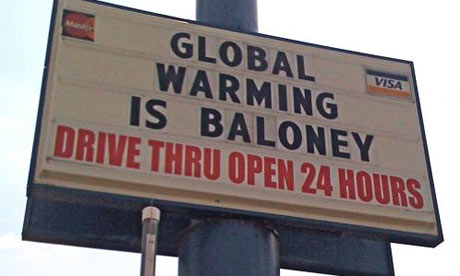
'Global warming is baloney' signs put the heat on Burger King
A row between the fast food giant Burger King and one of its major franchise owners has erupted over roadside signs proclaiming "global warming is baloney".
The franchisee, a Memphis-based company called the Mirabile Investment Corporation (MIC) that owns more than 40 Burger Kings across Tennessee, Arkansas and Mississippi, has described Burger King as acting "kinda like cockroaches" over the controversy. MIC says it does not believe Burger King has the authority to make it take the signs down.
The dispute began to sizzle last week, when a local newspaper reporter in Memphis, Tennessee, noticed the signs outside two restaurants in the city and contacted the corporation to establish if the message represented its official viewpoint. Burger King's headquarters in Miami said it did not, adding that it had ordered MIC to take the signs down.
But a few days later readers of the Memphis paper said they had seen about a dozen Burger King restaurants across the state displaying the signs and that some had yet to be taken down. Media attempts to contact MIC to establish why it was taking an apparently defiant stance were rebuffed, but the Guardian managed to grill MIC's marketing president, John McNelis.
"I would think [Burger King] would run from any form of controversy kinda like cockroaches when the lights get turned on," said Mr McNelis. "I'm not aware of any direction that they gave the franchisee and I don't think they have the authority to do it."
McNelis added: "The [restaurant] management team can put the message up there if they want to. It is private property and here in the US we do have some rights. Notwithstanding a franchise agreement, I could load a Brinks vehicle with [rights] I've got so many of them. By the time the Burger King lawyers work out how to make that stick we'd be in the year 2020."
He continued: "Burger King can bluster all they want about what they can tell the franchisee to do, but we have free-speech rights in this country so I don't think there's any concerns."
The Guardian sent a transcript of the interview to Susan Robison, Burger King's vice-president of corporate communications.
She responded: "The statement that was posted on several restaurants' reader boards in the Memphis area, and the view expressed by the franchisee on this issue does not reflect Burger King Corp's opinion … BKC has guidelines for signage used by franchisees [which] were not followed. We have asked the franchisee to remove the signage and have been told that the franchisee will comply."
http://www.guardian.co.uk/world/2009/jun/05/burger-king-global-warming-us

NRA gun case appeal heads to high court
WASHINGTON — One year after the Supreme Court ruled that the Second Amendment protects an individual right to keep handguns, the justices have before them a new test of that right.
The National Rifle Association has appealed a ruling from a U.S. appeals court in Chicago that said the right to bear arms cannot be invoked by gun owners challenging state and local firearm regulations. It said the high court's groundbreaking decision last term in a case from Washington, D.C., allows the Second Amendment to cover only regulations by the federal government — at least until the high court weighs in again.
If the justices decide to take up the appeal, it would probably be heard next fall by a bench that could include Supreme Court nominee Sonia Sotomayor, who is now on a federal appeals court in New York. She was part of a court panel in January that similarly held that the 2008 gun decision did not apply to state regulations.
A U.S. appeals court in San Francisco, however, ruled this year that the Second Amendment indeed covers state gun restrictions.
"Because of the split in opinions (on the breadth of the 2008 ruling), it seems likely that the court would take it," says Daniel Vice, a lawyer with the Brady Center to Prevent Gun Violence. He says a ruling could affect gun laws nationwide.
The June 2008 decision, decided by a 5-4 vote, said for the first time that the Second Amendment protects an individual right to keep handguns at home for self-protection. A 1939 high court decision had led lower courts and many legal analysts to believe the Second Amendment covered firearm rights only for state militias such as National Guard units.
The new decision in National Rifle Association v. Chicago by the U.S. Court of Appeals for the 7th Circuit in Chicago, written by conservative Ronald Reagan appointee Frank Easterbrook, echoes the closely scrutinized decision from a three-judge panel of the U.S. appeals court for the 2nd Circuit that included Sotomayor.
She joined an opinion that rejected a challenge to a New York ban on certain weapons used in martial arts and emphasized that the high court has never specifically ruled that the Second Amendment can be applied to state regulations. That 2nd Circuit decision, Maloney v. Cuomo, provoked some gun rights groups to protest Sotomayor's nomination. The Virginia-based Gun Owners of America called her "an anti-gun radical."
Last Tuesday's decision by the 7th Circuit undercuts criticism that the Sotomayor panel decision was extreme. As Easterbrook wrote, specifically agreeing with the 2nd Circuit, the Supreme Court said in the 2008 case involving a District of Columbia handgun ban that it was not deciding whether the Second Amendment covered state or local regulations.
Justice Antonin Scalia, who authored the high court decision, noted that the case arose from the federal enclave of Washington, D.C., and that past cases said the Second Amendment covers only the federal government. With a new case from a state or municipality, the court could extend the reach of the Second Amendment.
Until then, Easterbrook wrote in the case involving handgun bans in Chicago and Oak Park, an appeals court may not "strike off on its own." He said that would undermine the uniformity of the nation's laws.
The NRA's Stephen Halbrook, representing Chicago and Oak Park residents who want to keep handguns at home, urged the justices to take up the 7th Circuit case to resolve the reach of last term's ruling.
Halbrook said the right to guns "allows one to protect life itself."
http://www.usatoday.com/news/washington/judicial/2009-06-07-court-guns_N.htm

The World is seems is interested in "privacy issues and civil liberties"
Swedish Pirate Party enters EU parliament: partial results
A Swedish party that wants to legalise Internet filesharing and beef up web privacy scored a big victory Sunday by winning a European parliament seat, results showed.
The Pirate Party won 7.1 percent of votes, taking one of Sweden's 18 seats in the European parliament, with ballots in 5,659 constituencies out of 5,664 counted.
"Privacy issues and civil liberties are important to people and they demonstrated that clearly when they voted today," one of the party's candidates, Anna Troberg, told Swedish television on Sunday.
The party was founded in January 2006 and quickly attracted members angered by controversial laws adopted in Sweden that criminalised filesharing and authorised monitoring of emails.
Its membership shot up after a Stockholm court on April 17 sentenced four Swedes to a year in jail for running one of the world's biggest filesharing sites, The Pirate Bay.
Prime Minister Fredrik Reinfeldt's conservative Moderates won 18.8 percent of votes and four seats, close to its score in the European election in 2004 but down sharply from the 26.1 percent it won in Sweden's 2006 general election.
Coming little more than a year ahead of Sweden's next general election in September 2010, political analyst Mats Knutson called the result a "formidable cold shower" for Reinfeldt, speaking on public television SVT.
The opposition Social Democrats, traditionally Sweden's biggest party, won 24.6 percent, also close to their result in 2004 and maintaining their five seats in the EU parliament.
The Greens scored a strong rise in support, and were credited with 10.8 percent of votes compared to 6.0 percent in 2004 and doubled their seats to two.
The formerly communist Left party saw its support drop from 12.8 percent in 2004 to 5.6 percent and one seat, a drop of one.
The far-right Sweden Democrats, which are not represented in Sweden's parliament, meanwhile tripled their score but not enough to win a seat in parliament.
Their support rose from 1.1 percent in 2004 -- and 2.9 percent in the 2006 general election -- to 3.3 percent.
Voter turnout in Sweden was 43.7 percent, higher than the 37.1 percent in the 2004 election, election officials said.
http://www.breitbart.com/article.php?id=CNG.243153c6a091a3b942a75077729e8c92.941&show_article=1

It were just about safety the police would have no problem with it, but the cameras are money makers and they need money now because they can not or will not make cuts in their budgets.
Software warns of speed camera locations
June 8, 2009 - 5:45am
WASHINGTON - Rather than obey the speed limit, some drivers are installing software that warns them to slow down when they are near a speed camera.
One software company that is cashing in on the trend to add more speed cameras across the nation is PhantomAlert.
PhantomAlert uses cars' Global Positioning System devices to track the location of speed and red light cameras. For a monthly, yearly or "lifetime" fee, subscribers get unlimited access to the service, including updates as more cameras are added.
Maurice Nelson, who directs Montgomery County's camera-enforcement program, says the service raises awareness of speed cameras. But Nelson tells The Washington Post that he hopes PhantomAlert doesn't send the message that drivers can speed until they are alerted.
Because compliance with the speed laws is the rationale for placing cameras in the first place, reaction from law enforcement is mixed. One thing Nelson objects to is an option that tells drivers the locations of sobriety checkpoints.
PhantomAlert is owned by Joseph Scott, whose previous projects include PhotoBlocker, a reflective spray-on substance intended to foil speed cameras, and PhotoShield, a clear license plate cover with the same purpose.
http://wtop.com/?nid=30&sid=1691544

Here is a great reason for Captiol Punishment
West Bank teen arrested in rape and murder of 8-month-old
A 17-year-old Terrytown man was arrested on charges of aggravated rape and first-degree murder of an 8-month-old child Saturday afternoon, the Jefferson Parish Sheriff's Office said.
Arnold T. Ross, of 136 Friedrichs Road in Terrytown, was booked into the Jefferson Parish Correctional Facility. No bond is available on the first-degree murder charge.
Ross was arrested after officers responded to a call of an unresponsive infant at 1656 Gary Court, Apt. B, near Gretna.
The infant, Da-Von Lonzo, was taken to Ochsner Westbank where he was pronounced dead shortly after arrival, according to a release issued by Col. John Fortunato, a spokesman for the sheriff's office.
The death was initially unclassified, but the Jefferson Parish coroner's office later reported it as a homicide after an autopsy of the child's body revealed multiple fractures consistent with a beating and tears in the anus.
Ross, who said he was the boyfriend of the infant's mother, initially told detectives that the baby fell down the stairs while he was babysitting, Fortunato said. But a neighbor reported hearing loud noises coming from the apartment, and investigators noted inconsistencies in Ross's account.
Ross later admitted that he beat the infant repeatedly when he would not stop crying, Fortunato said. When the child began to defecate on himself, Ross said he tried to clean it up, causing the tears, according to the release.
Ross has a record of previous arrests for possession of crack cocaine and marijuana, obscenity, battery on a correctional officer, three counts of battery on a teacher, three counts of theft, illegal carrying of a weapon and assault.

http://www.nola.com/news/index.ssf/2009/06/gretna_man_arrested_in_rape_an.html

Sunday, May 3, 2009

Eeyore's news and view

Social Security Benefits Not Expected to Rise in ’10
WASHINGTON — For the first time in more than three decades, Social Security recipients will not get any increase in their benefits next year, federal forecasts show.
The absence of a cost-of-living adjustment, calculated under a formula set by law, will be a shock to older Americans already hit by plummeting home values, investment losses and rising health costs. More than 50 million people receive Social Security.
“Most seniors have never been through a year in which there was no Social Security COLA,” said David M. Certner, legislative counsel at AARP, the lobby for older Americans. Beneficiaries have received automatic cost-of-living adjustments every year since 1975. The increase this year was 5.8 percent.
In theory, low inflation is good for people on fixed incomes. But it is creating political and policy problems for Congress, which is just learning of the implications for Social Security and Medicare. The forecasts, by the Obama administration and the Congressional Budget Office, indicate that Social Security beneficiaries will not receive any cost-of-living increase in 2010 or in 2011. The COLA is intended to preserve the purchasing power of Social Security, by increasing benefits to keep pace with consumer prices. In the last year, overall inflation has been low, largely because of the economic downturn and a decline in energy prices.
A freeze in Social Security benefits would have major implications for Medicare because the COLA, in effect, puts a cap on premiums for Part B of Medicare, which covers doctors’ services.
If there is no cost-of-living adjustment for Social Security, about three-fourths of beneficiaries will not see any change in their basic Part B premiums, federal officials said. But some beneficiaries do not have this protection and could face substantial increases in their Part B premiums.
In addition, millions of beneficiaries could see higher premiums for drug coverage, provided under Part D of Medicare.
Social Security and Medicare trustees will describe the outlook for benefits and premiums in their annual reports this month.
Officials have already said the condition of Medicare’s hospital insurance trust fund is deteriorating because of the recession, which has reduced payroll tax revenues, the main source of money for the fund. Spending on Social Security and Medicare totaled more than $1 trillion last year, accounting for more than one-third of the federal budget.
Most people on Medicare have Part B premiums deducted from their monthly Social Security checks. These premiums have historically increased much faster than Social Security benefits.
Under federal law, most Medicare beneficiaries have some protection. Their basic Part B premiums cannot rise more than the dollar amount of the cost-of-living increase in their Social Security checks. So if there is no COLA, their basic Part B premiums will not increase.
But one-fourth of Medicare beneficiaries are not protected by the law, and their premiums could increase.
Most Medicare beneficiaries pay a monthly Part B premium of $96.40. The Congressional Budget Office estimates that the basic premium will rise to $119 next year and $123 in 2011 for those who are not protected under federal law.
Douglas W. Elmendorf, director of the Congressional Budget Office, predicted that inflation would remain low for several years, so Social Security might not pay a cost-of-living increase until January 2013. President Obama’s budget assumes no increase in 2010 or 2011, then a 1.4 percent COLA in 2012.
Mr. Certner, from AARP, described the outlook for consumers: “If, as expected, there is no COLA in Social Security next year but premiums for drug coverage increase, as expected, millions of beneficiaries will see their Social Security checks reduced for the first time.”

http://www.nytimes.com/2009/05/03/us/politics/03benefits.html?_r=1&scp=2&sq=social%20security&st=cse

HIV patients at higher risk from flu, WHO says
02 May 2009 11:53:21 GMT Source: Reuters
* HIV patients at high risk from flu, need antivirals most
* WHO fears complications if HIV and H1N1 viruses combine
(Adds background on HIV, seasonal influenza, antivirals)
By Laura MacInnis
GENEVA, May 2 (Reuters) - People with HIV are at high risk from the new flu strain that the World Health Organisation said is on the verge of a pandemic, the WHO said on Saturday.
The United Nations agency said people with immunodeficiency diseases -- including the AIDS virus -- will most likely be vulnerable to health complications from the H1N1 strain, as they are from regular seasonal flu, which kills between 250,000 and 500,000 people a year.
HIV and the new flu strain could also mix together in a dangerous way, as has occurred with HIV and tuberculosis, the WHO said in guidance for health workers on its website.
"Although there are inadequate data to predict the impact of a possible human influenza pandemic on HIV-affected populations, interactions between HIV/AIDS and A(H1N1) influenza could be significant," it said.
"HIV-infected persons should be considered as a high risk and a priority population for preventive and therapeutic strategies against influenza including emerging influenza A(H1N1) virus infection," it said.
The virus widely known as "swine flu" has been most severe in Mexico, where government authorities say it has killed more than 100 people, and caused more mild symptoms as it spread around the world to countries including the United States, Austria, Israel, New Zealand and South Korea. [L2430119]
Although the outbreak remains tiny in scale compared to other epidemics such as malaria, hepatitis, and meningitis, the WHO has raised its pandemic alert level to 5 out of 6 due to its rapid spread as well as the possibility that the flu could cause more devastation in poor and disease-prone communities.
Countries with high rates of HIV -- most of which are in Africa -- should work to ensure that vulnerable people get the drugs they need to fight off the flu infection, the WHO said.
Antiviral medicines such as Tamiflu and Relenza decrease the duration of virus excretion and the severity of illness when used for treatment of ill patients, and may also prevent illness when used for prophylaxis.
"Patients at higher risk for complications of influenza including those with HIV infection should be among those prioritised for antiviral treatment with oseltamivir or zanamivir which shortens illness duration and severity in seasonal influenza," the WHO guidance read.
It is best if people infected with the flu strain start to take the antivirals within 48 hours of the onset of symptoms, according to the WHO. There are no known problems with taking those drugs alongside the anti-retrovirals that HIV patients take to suppress their virus.
According to WHO estimates, there are 33 million people infected with immune-weakening HIV worldwide.
http://www.alertnet.org/thenews/newsdesk/L2516414.htm

YouTube helped father deliver baby
Marc Stephens said he had to act quickly when his wife Jo went into labour three weeks early as she had a history of fast births with her previous three children.
The 28-year-old Royal Navy air engineer, from Redruth, Cornwall, searched "how to deliver a baby" on the internet and after viewing a few clips said he was ready to help deliver healthy baby Gabriel.
Mr Stephens said: "I didn't even have time to panic. She started complaining of pain around 10.30pm. I went on Google and watched a couple of clips on YouTube.
"At 2.30am she woke me up, but when I rang the midwife to come out she said they were busy at the hospital.
"The next thing I know she is coming through the bedroom doorway on all-fours. I looked down and the baby's head was showing."
After delivering baby Gabriel safely all the family, including daughters Jasmine, two, Sophie, five and Zoe, six, waited for an ambulance to take them to the Royal Cornwall Hospital at Truro.
They were all home again by 6.30am.
Mrs Stephens, 28, said she and baby Gabriel are doing well and being looked after at home.
http://www.thisislondon.co.uk/standard/article-23684595-details/YouTube+helped+father+deliver+baby/article.do

Quote comes to mind. Power corrupts and absolute power corrupts absolutely.
Obama revelling in U.S. power unseen in decades
WASHINGTON (Reuters) - Barack Obama is revelling in presidential power and influence unseen in Washington for decades.
Barely 100 days in office, the U.S. president and his Democratic Party have firm control over the White House and Congress and the ability to push through ambitious plans.
Now, with the coming retirement of a Supreme Court justice clearing the way for him to appoint a successor, Obama already is assured a legacy at the top of all three branches of government -- executive, legislative and judicial.
On the corporate front, the federal government's pumping of billions of dollars in bailout money into banks and auto companies has given Obama the power to force an overhaul in those industries, a remarkable intervention in capitalist industries by the state.
Americans are giving him leeway as well. His job approval ratings are well over 60 percent, giving him political capital to undertake big challenges.
His political opponents, the Republicans, are in disarray, reduced in numbers and engaged in an internal struggle over how to recover from devastating election losses in 2006 and last year.
Experts speak of Obama in the same league as such transformational presidents as Democrat Franklin Roosevelt, who led the United States through the Great Depression and World War Two, and Republican Ronald Reagan, who led the country to victory in the Cold War.
"I cannot in my memory remember a time when a president of the United States has had more influence," said Democratic strategist Doug Schoen, who worked in the Clinton White House.
"Not only is it his moment, it is a level of influence and power for a president that is literally unprecedented from any time since the New Deal and Franklin Roosevelt. If he handles it right, it could be his century."
STROKE OF LUCK
Obama is seeing evidence that with power comes the occasional stroke of luck.
A gift came in the party switch this week by Pennsylvania Senator Arlen Specter from the Republicans to the Democrats.
It could give the Democrats unfettered authority. If and when Minnesota Democrat Al Franken overcomes a recount battle and takes his Senate seat, Democrats will have a 60-vote supermajority in the 100-member Senate.
The announced retirement of Supreme Court Justice David Souter has given Obama the opportunity to put his imprint on the highest U.S. court and replace one of the court's liberals with another liberal voice.
Although he will not be able to change the court's balance of power from a conservative majority any time soon, he will be able to select a justice likely to remain on the bench long after Obama has left the White House.
How long will his luck last?
With the U.S. economy reeling and millions of Americans without jobs, Obama has his work cut out for him. He has a long list of challenges, and spoke of them at a news conference this week.
"If you could tell me right now that, when I walked into this office that the banks were humming, that autos were selling, and that all you had to worry about was Iraq, Afghanistan, North Korea, getting healthcare passed, figuring out how to deal with energy independence, deal with Iran, and a pandemic flu, I would take that deal," Obama said.
Pollster John Zogby said that after his first 100 days, Obama now embarks on another weighty period in which Americans will want to see evidence that his $787 billion economic stimulus approved in February is working.
"I think by late June, they are going to have to start seeing some of these economic indicators stabilizing or at least some orange cones and hard hats out on the roads -- something that indicates either a stemming of the tide or some kind of progress," Zogby said.
Those who keenly watch the poll numbers also point out that while Obama is personally popular, some of the items on his agenda are less so.
"I think he will always stay personally popular," said Republican strategist Charlie Black, who was a senior adviser on Republican John McCain's presidential campaign last year. "But when you test the individual policies, a majority will tell you we're spending too much money."
"On the policy proposals the jury is out as to how popular they will be," he said.
http://uk.reuters.com/article/motoringAutoNews/idUKTRE5406CF20090501

Tuesday, April 28, 2009

Eeyores news and view

As everyone has a right to an opinion, because of the first amendment, it does mean that they are right. In fact they could be bordering on senility, as by the following op ed piece. I have heard it said and try to put it into personal practice, "that is better to be thought a fool, then open your mouth and prove them right"
What Happened to the Ban on Assault Weapons?
By JIMMY CARTER
Published: April 26, 2009
THE evolution in public policy concerning the manufacture, sale and possession of semiautomatic assault weapons like AK-47s, AR-15s and Uzis has been very disturbing. Presidents Ronald Reagan, George H.W. Bush, Bill Clinton and I all supported a ban on these formidable firearms, and one was finally passed in 1994.
When the 10-year ban was set to expire, many police organizations — including 1,100 police chiefs and sheriffs from around the nation — called on Congress and President George W. Bush to renew and strengthen it. But with a wink from the White House, the gun lobby prevailed and the ban expired.
I have used weapons since I was big enough to carry one, and now own two handguns, four shotguns and three rifles, two with scopes. I use them carefully, for hunting game from our family woods and fields, and occasionally for hunting with my family and friends in other places. We cherish the right to own a gun and some of my hunting companions like to collect rare weapons. One of them is a superb craftsman who makes muzzle-loading rifles, one of which I displayed for four years in my private White House office.
But none of us wants to own an assault weapon, because we have no desire to kill policemen or go to a school or workplace to see how many victims we can accumulate before we are finally shot or take our own lives. That’s why the White House and Congress must not give up on trying to reinstate a ban on assault weapons, even if it may be politically difficult.
An overwhelming majority of Americans, including me and my hunting companions, believe in the right to own weapons, but surveys show that they also support modest restraints like background checks, mandatory registration and brief waiting periods before purchase.
A majority of Americans also support banning assault weapons. Many of us who hunt are dismayed by some of the more extreme policies of the National Rifle Association, the most prominent voice in opposition to a ban, and by the timidity of public officials who yield to the group’s unreasonable demands.
Heavily influenced and supported by the firearms industry, N.R.A. leaders have misled many gullible people into believing that our weapons are going to be taken away from us, and that homeowners will be deprived of the right to protect ourselves and our families. The N.R.A. would be justified in its efforts if there was a real threat to our constitutional right to bear arms. But that is not the case.
Instead, the N.R.A. is defending criminals’ access to assault weapons and use of ammunition that can penetrate protective clothing worn by police officers on duty. In addition, while the N.R.A. seems to have reluctantly accepted current law restricting sales by licensed gun dealers to convicted felons, it claims that only “law-abiding people” obey such restrictions — and it opposes applying them to private gun dealers or those who sell all kinds of weapons from the back of a van or pickup truck at gun shows.
What are the results of this profligate ownership and use of guns designed to kill people? In 2006, the Centers for Disease Control and Prevention reported more than 30,000 people died from firearms, accounting for nearly 20 percent of all injury deaths. In 2005, every nine hours a child or teenager in the United States was killed in a firearm-related accident or suicide.
Across our border, Mexican drug cartels are being armed with advanced weaponry imported from the United States — a reality only the N.R.A. seems to dispute.
The gun lobby and the firearms industry should reassess their policies concerning safety and accountability — at least on assault weapons — and ease their pressure on acquiescent politicians who fear N.R.A. disapproval at election time. We can’t let the N.R.A.’s political blackmail prevent the banning of assault weapons — designed only to kill police officers and the people they defend.
Jimmy Carter, the 39th president, is the winner of the 2002 Nobel Peace Prize.
http://www.nytimes.com/2009/04/27/opinion/27Carter.html?ref=opinion

G.E.’s Breakthrough Can Put 100 DVDs on a Disc
Published: April 26, 2009
General Electric says it has achieved a breakthrough in digital storage technology that will allow standard-size discs to hold the equivalent of 100 DVDs.
Nathaniel Brooks for The New York Times
Brian Lawrence leads G.E.’s holographic storage program.
The storage advance, which G.E. is announcing on Monday, is just a laboratory success at this stage. The new technology must be made to work in products that can be mass-produced at affordable prices.
But optical storage experts and industry analysts who were told of the development said it held the promise of being a big step forward in digital storage with a wide range of potential uses in commercial, scientific and consumer markets.
“This could be the next generation of low-cost storage,” said Richard Doherty, an analyst at Envisioneering, a technology research firm.
The promising work by the G.E. researchers is in the field of holographic storage. Holography is an optical process that stores not only three-dimensional images like the ones placed on many credit cards for security purposes, but the 1’s and 0’s of digital data as well.
The data is encoded in light patterns that are stored in light-sensitive material. The holograms act like microscopic mirrors that refract light patterns when a laser shines on them, and so each hologram’s recorded data can then be retrieved and deciphered.
Holographic storage has the potential to pack data far more densely than conventional optical technology, used in DVDs and the newer, high-capacity Blu-ray discs, in which information is stored as a pattern of laser-etched marks across the surface of a disc. The potential of holographic technology has long been known. The first research papers were published in the early 1960s.
Many advances have been made over the years in the materials science, optics and applied physics needed to make holographic storage a practical, cost-effective technology. And this year, InPhase Technologies, a spinoff of Bell Labs of Alcatel-Lucent, plans to introduce a holographic storage system, using $18,000 machines and expensive discs, for specialized markets like video production and storing medical images.
To date, holographic storage has not been on a path to mainstream use. The G.E. development, however, could be that pioneering step, according to analysts and experts. The G.E. researchers have used a different approach than past efforts. It relies on smaller, less complex holograms — a technique called microholographic storage.
A crucial challenge for the team, which has been working on this project since 2003, has been to find the materials and techniques so that smaller holograms reflect enough light for their data patterns to be detected and retrieved.

The recent breakthrough by the team, working at the G.E. lab in Niskayuna, N.Y., north of Albany, was a 200-fold increase in the reflective power of their holograms, putting them at the bottom range of light reflections readable by current Blu-ray machines.
“We’re in the ballpark,” said Brian Lawrence, the scientist who leads G.E.’s holographic storage program. “We’ve crossed the threshold so we’re readable.”
In G.E.’s approach, the holograms are scattered across a disc in a way that is similar to the formats used in today’s CDs, conventional DVDs and Blu-ray discs. So a player that could read microholographic storage discs could also read CD, DVD and Blu-ray discs. But holographic discs, with the technology G.E. has attained, could hold 500 gigabytes of data. Blu-ray is available in 25-gigabyte and 50-gigabyte discs, and a standard DVD holds 5 gigabytes.
“If this can really be done, then G.E.’s work promises to be a huge advantage in commercializing holographic storage technology,” said Bert Hesselink, a professor at Stanford and an expert in the field.
The G.E. team plans to present its research data and lab results at an optical data storage conference in Orlando next month.
Yet, analysts say, the feasibility of G.E.’s technology remains unproved and the economics uncertain. “It’s always well to remember that the most important technical specification in any storage device, however impressive the science behind it, is price,” said James N. Porter, an independent analyst of the storage market.
When Blu-ray was introduced in late 2006, a 25-gigabyte disc cost nearly $1 a gigabyte, though it is about half that now. G.E. expects that when they are introduced, perhaps in 2011 or 2012, holographic discs using its technology will be less than 10 cents a gigabyte — and fall in the future.
“The price of storage per gigabyte is going to drop precipitously,” Mr. Lawrence said.
G.E. will first focus on selling the technology to commercial markets like movie studios, television networks, medical researchers and hospitals for holding data-intensive images like Hollywood films and brain scans. But selling to the broader corporate and consumer market is the larger goal.
To do that, G.E. will have to work with partners to license its holographic storage technology and expertise, and the company is already talking with major electronics and optical storage producers, said Bill Kernick, who leads G.E.’s technology sales unit. The holographic research was originally related to G.E.’s plastics business, which it sold two years ago to the Saudi Basic Industries Corporation for $11.6 billion.
http://www.nytimes.com/2009/04/27/technology/business-computing/27disk.html?_r=1

Army Biolab’s Missing Vials May Never Be Found (Which, Oddly, Isn’t That Scary)By Jason Sigger April 23, 2009
Vials of a potentially harmful pathogen have gone missing at Fort Detrick, the Army’s main biodefense lab. But don’t freak out. The samples of Venezuelan Equine Encephalitis (VEE) virus are relatively small. The Army has found “no evidence yet of criminal misconduct,” the Washington Post reports. And the
virus usually causes only “a mild flulike illness” — although “brain
inflammation and death” are possible, too.
“It has potential for use as a biological weapon
but is far less lethal than some other agents the lab works with.”
And that’s the real thing to keep in consideration. This isn’t anthrax, it’s a relatively non-lethal biological agent. Yes, it is highly infectious and easily aerosolized. Yes, that makes VEE a good candidate for military applications. And yes, as a virus, once a person is infected, there is no cure; like the flu, you have to ride out the effects. But it’s not really a mass casualty tool, if you’re a terrorist looking for lots of bodies. That is to say, if someone were to get a quantity of VEE agent and some cooperative mosquitoes, it would lay up a number of people in the hospital, but the virus would not kill people as aerosolized anthrax would. And because the agent is not contagious, a VEE outbreak within the United States could be rapidly contained by existing public health measures.
This is yet another illustration of the difficulty of implementing biosecurity controls. This isn’t like counting nukes or chemical munitions. Biological material can be grown, and on the other hand, it can die off. So what happens if the bugs in a few test tubes die off, and the scientist just shrugs and cleans them out without noting the action in his lab books? A few years later, and people wonder, what happened to the material in test tubes 45-48? Too late to find out, memories slip, records don’t show anything. This isn’t a crisis situation, but it is a tough nut to crack.
“We’ll probably never know exactly what happened,” one Army official tells the Post. “It could be the freezer malfunction. It could be they never
existed.”
http://www.wired.com/dangerroom/2009/04/ft-detricks-bug

Americans told to wear masks as swine flu spreads round globe
...
The White House said that President Obama’s health “was never in any danger”, despite reports that Felipe Solis, an archaeologist he met on a trip to Mexico last week, had died soon after from “flu-like symptoms”.
Robert Gibbs, the White House Press Secretary, said that based on the incubation period for swine flu, there was no reason for Mr Obama to be tested for the disease. Although the President is being briefed on the situation every few hours, Mr Gibbs insisted: “This is not a time for panic.”
...
http://www.timesonline.co.uk/tol/news/uk/health/article6173927.ece

WHO raises its pandemic alert level on swine flu
MEXICO CITY – The swine flu epidemic entered a dangerous new phase Monday as the death toll climbed in Mexico and the number of suspected cases there and in the United States nearly doubled. The World Health Organization raised its alert level but stopped short of declaring a global emergency.
The United States advised Americans against most travel to Mexico and ordered stepped up border checks in neighboring states. The European Union health commissioner advised Europeans to avoid nonessential travel both to Mexico and parts of the United States.
The virus poses a potentially grave new threat to the U.S. economy, which was showing tentative early signs of a recovery. A widespread outbreak could batter tourism, food and transportation industries, deepening the recession in the U.S. and possibly worldwide.
The suspected number of deaths rose to 149 in Mexico, the epicenter of the outbreak with nearly 2,000 people believed to be infected.
The number of U.S. cases doubled to 42, the result of further testing at a New York City school, although none was fatal. Other U.S. cases have been reported in Ohio, Kansas, Texas and California. Worldwide there were 73 cases, including six in Canada, one in Spain and two in Scotland.
While the total cases were still measured in hundreds, not thousands, Mexican Health Secretary Jose Angel Cordova said the epidemic was entering an extremely dangerous phase, with the number of people infected mushrooming even as authorities desperately ramped up defenses.
"We are in the most critical moment of the epidemic. The number of cases will keep rising, so we have to reinforce preventative measures," Cordova said at a news conference.
The WHO raised the alert level to Phase 4, meaning there is sustained human-to-human transmission of the virus causing outbreaks in at least one country.
Its alert system was revised after bird flu in Asia began to spread in 2004, and Monday was the first time it was raised above Phase 3.
"At this time, containment is not a feasible option," as the virus has already spread to several other countries, said WHO Assistant Director-General Keiji Fukuda.
Putting an alert at Phases 4 or 5 signals that the virus is becoming increasingly adept at spreading among humans. That move could lead governments to set trade, travel and other restrictions aimed at limiting its spread.
Phase 6 is for a full-blown pandemic, characterized by outbreaks in at least two regions of the world.
It could take 4-6 months before the first batch of vaccines are available to fight the virus, WHO officials said.
Russia, Hong Kong and Taiwan said they would quarantine visitors showing symptoms of the virus amid global fears of a pandemic, an epidemic spread over a large area, either a region or worldwide.
President Barack Obama said the outbreak was reason for concern, but not yet "a cause for alarm."
Dr. Richard Besser, acting director of the Centers for Disease Control and Prevention, said that so far the virus in the United States seems less severe than in Mexico. Only one person has been hospitalized in the U.S.
"I wouldn't be overly reassured by that," Besser told reporters at CDC headquarters in Atlanta, raising the possibility of more severe cases in the United States.
"We are taking it seriously and acting aggressively," Besser said. "Until the outbreak has progressed, you really don't know what it's going to do."
U.S. customs officials began checking people entering U.S. territory. Millions of doses of flu-fighting medications from a federal stockpile were on their way to states, with priority given to the five already affected and to border states. Federal agencies were conferring with state and international governments.
"We want to make sure that we have equipment where it needs to be, people where they need to be and, most important, information shared at all levels," said Janet Napolitano, head of the Homeland Security Department.
"We are proceeding as if we are preparatory to a full pandemic," Napolitano said.
She said travel warnings for trips to Mexico would remain in place as long as swine flu is detected.
Mexico canceled school at all levels nationwide until May 6, and the Mexico City government said it was considering a complete shutdown, including all public transportation, if the death toll keeps rising. Labor Secretary Javier Lozano Alarcon said employers should isolate anyone showing up for work with fever, cough, sore throat or other signs of the flu.
Amid the warnings, the Mexican government grappled with increasing criticism of its response. At least two weeks after the first swine flu case, the government has yet to say where and how the outbreak began or give details on the victims.
The health department lacked the staff to visit the homes of all those suspected to have died from the disease, Cordova said.
Cordova said 1,995 people have been hospitalized with serious cases of pneumonia since the first case of swine flu was reported April 13. The government does not yet know how many were swine flu.
He said tests show a 4-year-old boy contracted the virus before April 2 in Veracruz state, where a community has been protesting pollution from a large pig farm.
The farm is run by Granjas Carroll de Mexico, a joint venture half owned by Virginia-based Smithfield Foods, Inc. Spokeswoman Keira Ullrich said the company has found no clinical signs or symptoms of the presence of swine flu in its herd or its employees working anywhere in Mexico.
As if the country did not have enough to deal with, Cordova's comments were briefly interrupted by a 5.6-magnitude earthquake in southern Mexico that rattled already jittery nerves and sent mask-wearing office workers into the streets of the capital.
Aside from the confirmed cases, 13 are suspected in New Zealand, and one is suspected in both France and Israel.
European Union Health Commissioner Androulla Vassiliou advised Europeans to avoid nonessential travel to Mexico and parts of the United States, although Besser said that including the U.S. in the advisory seemed unwarranted at this time.
State Department spokesman Robert A. Wood said Vassiliou's remarks were his "personal opinion," not an official EU position, and therefore the department had no comment.
"We don't want people to panic at this point," Wood said.
The U.S. stepped up checks of people entering the country by air, land and sea, and the State Department warned U.S. citizens to avoid nonessential travel to Mexico. It said those who live in Mexico should avoid hospitals or clinics there unless they have a medical emergency.
The best way to keep the disease from spreading, Besser said, is by taking everyday precautions such as frequent handwashing, covering up coughs and sneezes, and staying away from work or school if not feeling well. He said authorities are not recommending that people wear masks at work because evidence that it is effective "is not that strong."
Besser said about 11 million doses of flu-fighting drugs from a federal stockpile have been sent to states in case they are needed. That's roughly one quarter of the doses in the stockpile, he said.
There is no vaccine available to prevent the specific strain now being seen, he said, but some antiflu drugs do work once someone is sick.
If a new vaccine eventually is ordered, the CDC already has taken a key preliminary step — creating what's called seed stock of the virus that manufacturers would use.
Many of the cases outside Mexico have been relatively mild. Symptoms include a fever of more than 100, coughing, joint aches, severe headache and, in some cases, vomiting and diarrhea.
European and U.S. markets bounced back from early losses as pharmaceutical stocks were lifted by expectations that health authorities will increase stockpiles of anti-viral drugs. Stocks of airlines, hotels and other travel-related companies posted sharper losses.
WHO spokesman Peter Cordingley singled out air travel as an easy way the virus could spread, noting that the WHO estimates that up to 500,000 people are on planes at any time.
Governments in Asia — with potent memories of previous flu outbreaks — were especially cautious. Singapore, Thailand, Japan, Indonesia and the Philippines dusted off thermal scanners used in the 2003 SARS crisis and were checking for signs of fever among passengers from North America. South Korea, India and Indonesia also announced screening.
In Malaysia, health workers in face masks took the temperatures of passengers as they arrived on a flight from Los Angeles.
China said anyone experiencing flu-like symptoms within two weeks of arrival had to report to authorities.
China, Russia and Ukraine were among countries banning imports of pork and pork products from Mexico and three U.S. states that have reported swine flu cases, while other countries, such as Indonesia, banned all pork imports.
The CDC says people cannot get the flu by eating pork or pork products.
Germany's leading vacation tour operators were skipping stops in Mexico City as a precaution. The Hannover-based TUI said trips through May 4 to Mexico City were being suspended, including those operated by TUI itself and also through companies 1-2 Fly, Airtours, Berge & Meer, Grebeco and L'tur.
Japan's largest tour agency, JTB Corp., suspended tours to Mexico through June 30. Russian travel agencies said about a third of those planning to travel to Mexico in early May had already canceled.
On the Net:
WHO swine flu page: http://www.who.int/csr/disease/swineflu/en/index.html
CDC: http://www.cdc.gov
http://news.yahoo.com/s/ap/med_swine_flu

Tuesday, March 24, 2009

Eeyores News and View

Drug-resistant flu strains throwing doctors a curve
Not long ago, when infectious-disease specialist Connie Price saw a patient hospitalized with flu at Denver Health Medical Center, she had a powerful weapon at hand: a drug that could shorten the course of the illness and lessen its misery.
Now, the strength of that weapon, Tamiflu, has been undermined by a widely circulating flu strain, type A H1N1, that has developed the ability to resist the drug.
Even as this year's flu season winds down, doctors say the implications of the spread of drug-resistant flu strains could resonate in seasons to come, affecting treatment and highlighting the need for faster flu tests, new drugs and global monitoring of flu viruses.
TAMIFLU: Virus growing resistant to key weapon
Tamiflu, whose medical name is oseltamavir, is one of two drugs in a relatively new class of anti-flu medications that reduce the duration and severity of flu. Because it is easily taken in pill or liquid form, it quickly became the antiviral of choice for treating both seasonal flu and potential pandemic flu strains, such as H5N1, known as bird flu. Another drug in the same class is Relenza, or zanamavir, which has similar flu-fighting effects but is taken as an inhaled powder, which makes it difficult for some people to use, especially people who have lung problems such as asthma.
In recent years, because of rising concern about the potential for a flu pandemic, governments around the world have been stockpiling millions of doses of Tamiflu, along with smaller amounts of Relenza and older antivirals, amantadine and rimantadine.
Tamiflu still is effective against bird flu in most cases, though some variants show signs of reduced sensitivity, says Frederick Hayden of the Infectious Disease Society of America's Pandemic Flu Task Force. "It's important that we monitor susceptibility patterns, not only in humans but also in avian viruses."
Meanwhile, for doctors treating patients with regular flu, this season has been dizzyingly complicated. Type A H1N1 flu, the predominant strain circulating now, is the one resistant to Tamiflu; the two others in circulation, type A H3N2 and type B, are not.
Patients who have H1N1 flu can be treated with Relenza if they can inhale the medicine. If not, they can take amantadine or rimantadine. But if they have either of the other two flu strains, they can take only Tamiflu or Relenza, because H3N2 flu is resistant to amantadine and rimantadine, and those drugs don't work against type B flu.
The trouble is, most doctors don't know which flu strain is infecting their patients. The symptoms are the same. Rapid flu diagnostic tests may be able to tell if it's influenza A or B, but can't identify type A subtypes, such as H1N1 or H3N2. The gold-standard test, a viral culture, takes about a week to produce results.
Difficult choices
Price says that given the inability to quickly know exactly what flu strain is present, she issued a "blanket recommendation" for doctors treating patients with flu at her hospital. She advised them to use Relenza, if possible, and if not, to always combine Tamiflu with one of the older drugs, such as rimantadine.
That is "never desirable," she says, because it means some patients will be overmedicated and subject to drug side effects, such as nausea, loss of appetite, nervousness or dizziness.
The sickest patients who could benefit most from antiviral treatment, she says, are often those who are elderly or who have underlying health problems that put them at higher risk for flu complications. "Now, to give them two more drugs that may interact with other therapies, it makes it more complicated," to treat, Price says.
The U.S. Centers for Disease Control and Prevention says this has been a milder flu season than in previous years. But the most recent report shows flu is widespread in 30 states, and 32 children have died because of the flu since the season began last September. In the 2007-08 season, 88 children died of illnesses associated with flu.
Drugmakers are working on new antivirals, including a potent injectable that could be used for hospitalized patients. The drug, peramivir, developed by BioCryst with $102.6 million from the Department of Health and Human Services, "is a major public health priority," says Bill Sheridan, chief medical officer. Clinical trials are underway in Japan and the USA, but testing at least through next flu season is needed before the drug can be considered by the Food and Drug Administration.
Other medications are being developed, but they're not expected to be available for years, which leaves annual flu vaccination as the best defense, says Hayden, a flu researcher at the University of Virginia. "Make sure you get vaccinated," he says, "and use common sense in terms of reducing exposure to the virus."
http://www.usatoday.com/news/health/2009-03-22-flu-resistance_N.htm?loc=interstitialskip
ANCHORAGE, Alaska — Alaska's Mount Redoubt is rumbling again and geologists at the Alaska Volcano Observatory increased the official alert level to orange, the stage just before eruption.
A significant eruption did not appear imminent, geologists said Sunday, but they cautioned that conditions could evolve rapidly.
The 10,200-foot Redoubt Volcano is about 100 miles southwest of Anchorage.
Ash from the volcano could harm engines and is especially dangerous for aircraft. Ash blown to cities also can cause respiratory problems.
Residents of south-central Alaska have kept a close eye on Redoubt since the observatory on Jan. 25 warned that an eruption could occur at any moment. The alert level was downgraded last week after nearly two months.
Just after 1 p.m. Sunday, however, seismic activity picked up again.
"We got a return of this stuff we call volcanic tremors," said geologist Chris Waythomas. "Think of the phenomenon that produces sound in an organ pipe."
Instead of sound waves in a pipe, geologists detect movement of magma within cracks and fractures of the mountain that resonates and produces a distinct signal.
"We think it's associated with the hydrothermal system there. It's being reinvigorated," Waythomas said.
The tremors lasted about four hours and then settled down.
An observatory flight Sunday reported that a steam and ash plume rose as high as 15,000 feet (4,600 meters) above sea level and produced minor ash fall on the upper south flank of the mountain. Later reports indicated the plume had changed into mostly steam.
Ash emission had not been seen before, Waythomas said, and until samples are taken, geologists will not know whether it's new magma or, more likely, old ground-up material from previous episodes.
Other signs that a volcano could erupt are deformities in the landscape and the mix of gases escaping from vents on the side of the mountain.
Alaska volcanos typically explode and shoot ash upward, sometimes to 50,000 feet (15,000 meters), high into the jet stream. An eruption of Redoubt on Dec. 15, 1989, sent ash 150 miles (240 kilometers) away into the path of a KLM jet, stopping its engines. The jet dropped more than two miles (three kilometers) before the crew was able to restart engines and land safely at Anchorage.
http://frc4u.org/phpbb/index.php?topic=519.0


UK team builds robot fish to detect pollution
LONDON (Reuters) - Robot fish developed by British scientists are to be released into the sea off north Spain to detect pollution.
If next year's trial of the first five robotic fish in the northern Spanish port of Gijon is successful, the team hopes they will be used in rivers, lakes and seas across the world.
The carp-shaped robots, costing 20,000 pounds ($29,000) apiece, mimic the movement of real fish and are equipped with chemical sensors to sniff out potentially hazardous pollutants, such as leaks from vessels or underwater pipelines.
They will transmit the information back to shore using Wi-Fi technology.
Unlike earlier robotic fish, which needed remote controls, they will be able to navigate independently without any human interaction.
Rory Doyle, senior research scientist at engineering company BMT Group, which developed the robot fish with researchers at Essex University, said there were good reasons for making a fish-shaped robot, rather than a conventional mini-submarine.
"In using robotic fish we are building on a design created by hundreds of millions of years' worth of evolution which is incredibly energy efficient," he said.
"This efficiency is something we need to ensure that our pollution detection sensors can navigate in the underwater environment for hours on end."
The robot fish will be 1.5 meters (nearly 5 feet) long -- roughly the size of a seal.
http://www.reuters.com/article/technologyNews/idUSTRE52J1RY20090320

U.N. panel says world should ditch dollar
LUXEMBOURG (Reuters) - A U.N. panel will next week recommend that the world ditch the dollar as its reserve currency in favor of a shared basket of currencies, a member of the panel said on Wednesday, adding to pressure on the dollar.
Currency specialist Avinash Persaud, a member of the panel of experts, told a Reuters Funds Summit in Luxembourg that the proposal was to create something like the old Ecu, or European currency unit, that was a hard-traded, weighted basket.
Persaud, chairman of consultants Intelligence Capital and a former currency chief at JPMorgan, said the recommendation would be one of a number delivered to the United Nations on March 25 by the U.N. Commission of Experts on International Financial Reform.
"It is a good moment to move to a shared reserve currency," he said.
Central banks hold their reserves in a variety of currencies and gold, but the dollar has dominated as the most convincing store of value -- though its rate has wavered in recent years as the United States ran up huge twin budget and external deficits.
Some analysts said news of the U.N. panel's recommendation extended dollar losses because it fed into concerns about the future of the greenback as the main global reserve currency, raising the chances of central bank sales of dollar holdings.
"Speculation that major central banks would begin rebalancing their FX reserves has risen since the intensification of the dollar's slide between 2002 and mid-2008," CMC Markets said in a note.
Russia is also planning to propose the creation of a new reserve currency, to be issued by international financial institutions, at the April G20 meeting, according to the text of its proposals published on Monday.
It has significantly reduced the dollar's share in its own reserves in recent years.
GOOD TIME
Persaud said that the United States was concerned that holding the reserve currency made it impossible to run policy, while the rest of world was also unhappy with the generally declining dollar.
"There is a moment that can be grasped for change," he said.
"Today the Americans complain that when the world wants to save, it means a deficit. A shared (reserve) would reduce the possibility of global imbalances."
Persaud said the panel had been looking at using something like an expanded Special Drawing Right, originally created by the International Monetary Fund in 1969 but now used mainly as an accounting unit within similar organizations.
The SDR and the old Ecu are essentially combinations of currencies, weighted to a constituent's economic clout, which can be valued against other currencies and indeed against those inside the basket.
Persaud said there were two main reasons why policymakers might consider such a move, one being the current desire for a change from the dollar.
The other reason, he said, was the success of the euro, which incorporated a number of currencies but roughly speaking held on to the stability of the old German deutschemark compared with, say, the Greek drachma.
Persaud has long argued that the dollar would give way to the Chinese yuan as a global reserve currency within decades.
A shared reserve currency might negate this move, he said, but he believed that China would still like to take on the role.
http://www.reuters.com/article/newsOne/idUSTRE52H2CY20090318

Along with the above article here is another along the same vein.
China calls for new reserve currency
By Jamil Anderlini in Beijing
Published: March 23 2009 12:16 Last updated: March 24 2009 00:06
China’s central bank on Monday proposed replacing the US dollar as the international reserve currency with a new global system controlled by the International Monetary Fund.
In an essay posted on the People’s Bank of China’s website, Zhou Xiaochuan, the central bank’s governor, said the goal would be to create a reserve currency “that is disconnected from individual nations and is able to remain stable in the long run, thus removing the inherent deficiencies caused by using credit-based national currencies”.
Analysts said the proposal was an indication of Beijing’s fears that actions being taken to save the domestic US economy would have a negative impact on China.
“This is a clear sign that China, as the largest holder of US dollar financial assets, is concerned about the potential inflationary risk of the US Federal Reserve printing money,” said Qu Hongbin, chief China economist for HSBC.
Although Mr Zhou did not mention the US dollar, the essay gave a pointed critique of the current dollar-dominated monetary system.
“The outbreak of the [current] crisis and its spillover to the entire world reflected the inherent vulnerabilities and systemic risks in the existing international monetary system,” Mr Zhou wrote.
China has little choice but to hold the bulk of its $2,000bn of foreign exchange reserves in US dollars, and this is unlikely to change in the near future.
To replace the current system, Mr Zhou suggested expanding the role of special drawing rights, which were introduced by the IMF in 1969 to support the Bretton Woods fixed exchange rate regime but became less relevant once that collapsed in the 1970s.
Today, the value of SDRs is based on a basket of four currencies – the US dollar, yen, euro and sterling – and they are used largely as a unit of account by the IMF and some other international organisations.
China’s proposal would expand the basket of currencies forming the basis of SDR valuation to all major economies and set up a settlement system between SDRs and other currencies so they could be used in international trade and financial transactions.
Countries would entrust a portion of their SDR reserves to the IMF to manage collectively on their behalf and SDRs would gradually replace existing reserve currencies.
Mr Zhou said the proposal would require “extraordinary political vision and courage” and acknowledged a debt to John Maynard Keynes, who made a similar suggestion in the 1940s.
http://www.ft.com/cms/s/0/7851925a-17a2-11de-8c9d-0000779fd2ac.html

Monday, March 16, 2009

Eeyore's News and view

MacBook pledges 8-hour battery life
Eight hours. Repeat it to yourself, slowly and carefully if you like. Eight hours. That's the battery life claimed for, and apparently delivered by, the $2,799 17-inch MacBook Pro recently shipped by Apple Inc.
Not having surveyed every last portable computer in the retail channel today, I won't swear to it, but I believe this is the longest notebook battery life out there, at least in terms of a "standard" battery that fits inside the notebook itself. Some "extended life" batteries can be attached to portable computers, creating a bulge (or a carrying handle of a sort). But in terms of self-contained batteries, the MacBook Pro likely takes the cake.
I did not run the battery down to zero, watching each minute tick off. But in test after unplugged test, the time remaining registered pretty darned close to eight hours and almost always more than seven. Compare that to the previous-generation 17-inch MacBook Pro that I use daily; fully charged, I can get about three hours out of the battery.
The new computer is also unique in terms of the battery itself: You can't swap it out for another battery. Apple has sealed the battery in the computer and claims it will last through five years of recharges. The company will replace the battery if need be, but this also marks a first, I believe, for the portable Mac line. By doing this, however, the firm is able to make the notebook thinner than previous models, while still clocking in at 6.6 pounds. No one would mistake this for the interoffice-envelope-friendly MacBook Air, but it's ergonomics are impressive.
Even with the battery life, however, many might wonder who would need a $2,799 notebook computer. I know of several folks who really do. The kinds of users who need and appreciate this kind of computer are involved in video or sound editing, photography, publishing, design, Internet work, that sort of thing — and we need to have this kind of power in a portable package. Things don't just happen in offices anymore, and I have a colleague who's as likely to edit high-definition video in the Amazon jungles of Brazil as in his editing bay in Silver Spring.
For these people — and perhaps for a few more — the new MacBook Pro represents a stunning achievement of design, engineering and performance. It is the kind of computer you can depend on when work beckons, and it'll probably deliver a fair load of fun, too.
On the work side, my test unit came with a 320 gigabyte hard disc drive and 4GB of RAM, both of which are more than enough for most needs. Video-heads may want to upgrade the hard drive independent of Apple, and a high-speed 500GB hard drive is due from Seagate later this month. But the "standard issue" hard drive and memory are double what roughly the same amount of moolah bought two years ago, so that's certainly progress.
The keyboard is also different from my workday MBPro: it's the "Chiclet" style now popular on Mac portables, and that's not difficult to type on. Some large portables include a separate numeric keypad, but this one doesn't. Apple says the aesthetics are better this way, and I can't argue. If you need to crunch numbers, separate keypads can be found.
Also nice here is the touchpad, which is "clickable" in place of mouse-buttons. You can also use various finger movements to "swipe" through Web pages and other applications. It's well done.
Graphics hounds will appreciate the two separate graphics processors. The standard graphics chip, from NVIDIA (STET), is the default processor and helps the unit deliver that close-to-eight-hour battery life. When you need to amp things up, a "discrete" NVIDIA GeForce 9600M GT processor can kick in to help performance. That's more for my friend Dan Weber the video editor than it would be for me, and its use trims battery life by about three hours. But I have the feeling Dan would appreciate a five-hour graphics powerhouse nonetheless.
Overall, this is an excellent, if "niche" machine — it's not for every kid going back to school. It's my hope that many of the high-end features here will migrate to other Mac portables at lower prices.
http://www.washingtontimes.com/news/2009/mar/16/kellner-macbook-pledges-8-hour-battery-life/

Russia weighs Cuba, Venezuela bases:
Russia could use bases for its strategic bombers on the doorstep of the United States in Cuba and Venezuela to underpin long-distance patrols in the region, a senior air force officer said Saturday. "This is possible in Cuba," General Anatoly Zhikharev, chief of the Russian air force's strategic aviation staff, told the Interfax-AVN military news agency.
The comments were the latest signal that Moscow intends to project its military capability in far-flung corners of the globe despite a tight defence budget and hardware that experts consider in many respects outdated.
Zhikharev indicated that Russia was looking only at occasional use of the facilities -- not setting up permanent bases in the region.
He noted that the Venezuelan constitution prohibited establishment of military bases of foreign states on Venezuelan territory and described the Russian possibile use of the facility there as "we land, we complete the flight, we take off."
Zhikharev said Cuba had a several air bases equipped with the long runways needed by the heavy bombers and said the facilities there were "entirely acceptable" for use by the Russian aircraft during long-distance patrols.
"If the will of the two states is there, the political will, then we are prepared to fly there" to the bases in Cuba, the agency quoted Zhikharev as saying.
The general also said that Venezuelan President Hugo Chavez had offered to let Russian strategic bombers use a military airfield on La Orchila island, a military base off the west coast of the country.
"Yes, there has been such a proposal from the Venezuelan president," Zhikharev said.
"If a relevant political decision is made, this is possible," he added.
Russia resumed patrols by its long-distance strategic bombers in August 2007 after a 15-year hiatus, noting at the time that it was mirroring the United States which never suspended its global bomber patrols after the Cold War.
Last year, Russia temporarily based a pair of Tu-160 bombers at an airbase in Venezuela in a carefully-choreographed display of force regarded by as a warning message to the United States.
A Russian flotilla led by the nuclear-powered cruiser Peter the Great also joined Venezuelan navy vessels for manoeuvres in the Caribbean late last year, timed to coincide with a visit to the region by President Dmitry Medvedev.
The previous US administration of George W. Bush officially shrugged off the Russian aviation and naval moves in Latin America, characterising them as more for show than anything representing a military worry for the United States.
Last July however, a top US air force officer warned that Russia would cross "a red line" if it were to base nuclear capable bombers in Cuba.
"If they did, I think we should stand strong and indicate that is something that crosses a threshold, crosses a red line for the United States of America," said General Norton Schwartz said on July 23.
The Interfax report said there were three types of Russian aircraft capable of long-distance bomber patrols: The Tu-95MS, the Tu-160 and the Tu-22.
It was Tu-160 strategic bombers that were sent to Venezuela for temporary basing last year. Each aircraft of this type is capable of carrying 12 cruise missiles that can be fitted with nuclear warheads
http://www.breitbart.com/article.php?id=CNG.9776268a25e75ad5b44b4d87e8a32a02.4a1&show_article=1
More information about the same story is found here also
http://www.washingtontimes.com/news/2009/mar/15/general-muses-over-basing-bombers-near-us/

Rescued AIG says it has to pay $165M in bonuses immediately
WASHINGTON (AP) — Leaders of the White House economic team and the Senate's top Republican bellowed about bonuses at a bailed-out insurance giant and pledged to prevent such payments in the future.
From one Sunday talk show to the next, they tore into the contracts that American International Group asserted had to be honored, to the tune of about $165 million and payable to executives by Sunday — part of a larger total payout reportedly valued at $450 million. The company has benefited from more than $170 billion in a federal rescue.
AIG has agreed to Obama administration requests to restrain future payments. Treasury Secretary Timothy Geithner pressed the president's case with AIG's chairman, Edward Liddy, last week.
"He stepped in and berated them, got them to reduce the bonuses following every legal means he has to do this," said Austan Goolsbee, staff director of President Obama's Economic Recovery Advisory Board.
"I don't know why they would follow a policy that's really not sensible, is obviously going to ignite the ire of millions of people, and we've done exactly what we can do to prevent this kind of thing from happening again," Goolsbee said.
Added Lawrence Summers, Obama's top economic adviser: "The easy thing would be to just say ... off with their heads, violate the contracts. But you have to think about the consequences of breaking contracts for the overall system of law, for the overall financial system."
Summers said Geithner used all his power, "both legal and moral, to reduce the level of these bonus payments."
The Democratic administration's argument about the sanctity of contracts was more than Senate Republican leader Mitch McConnell of Kentucky could bear.
"For them to simply sit there and blame it on the previous administration or claim contract — we all know that contracts are valid in this country, but they need to be looked at," McConnell said. "Did they enter into these contracts knowing full well that, as a practical matter, the taxpayers of the United States were going to be reimbursing their employees? Particularly employees who got them into this mess in the first place? I think it's an outrage."
In an interview that aired Sunday on CBS' 60 Minutes, Federal Reserve Chairman Ben Bernanke did not address the bonuses but expressed his frustration with the AIG intervention.
"It makes me angry. I slammed the phone more than a few times on discussing AIG," Bernanke said. "It's — it's just absolutely — I understand why the American people are angry. It's absolutely unfair that taxpayer dollars are going to prop up a company that made these terrible bets — that was operating out of the sight of regulators, but which we have no choice but to stabilize, or else risk enormous impact, not just in the financial system, but on the whole U.S. economy."
AIG reported this month that it had lost $61.7 billion for the fourth quarter of last year, the largest corporate loss in history.
In a letter to Geithner dated Saturday, Liddy said outside lawyers had informed the company that AIG had contractual obligations to make the bonus payments and could face lawsuits if it did not do so.
Liddy said in his letter that "quite frankly, AIG's hands are tied," although he said that in light of the company's current situation he found it "distasteful and difficult" to recommend going forward with the payments.
Liddy said the company had entered into the bonus agreements in early 2008 before AIG got into severe financial straits and was forced to obtain a government bailout last fall.
The bulk of the payments at issue cover AIG Financial Products, the unit of the company that sold credit default swaps, the risky contracts that caused massive losses for the insurer.
Goolsbee acknowledged the AIG example could make it harder to sell the administration's financial plan to Congress.
"Yes, you worry about that backlash. But you're also angry that this would happen at an institution that has been so troubled and you're trying to save. So I think that's perfectly fair," he said.
http://www.usatoday.com/money/industries/insurance/2009-03-15-summers-aig_N.htm?loc=interstitialskip

Minister beaten after clashing with Muslims on his TV show
By Jonathan Petre
Last updated at 4:39 PM on 15th March 2009
Comments (32) Add to My Stories A Christian minister who has had heated arguments with Muslims on his TV Gospel show has been brutally attacked by three men who ripped off his cross and warned: ‘If you go back to the studio, we’ll break your legs.’
The Reverend Noble Samuel was driving to the studio when a car pulled over in front of him. A man got out and came over to ask him directions in Urdu.
Mr Samuel, based at Heston United Reformed Church, West London, said: ‘He put his hand into my window, which was half open, and grabbed my hair and opened the door.
Frightened: TV minister Noble Samuel
He started slapping my face and punching my neck. He was trying to smash my head on the steering wheel.
Then he grabbed my cross and pulled it off and it fell on the floor. He was swearing. The other two men came from the car and took my laptop and Bible.’
The Metropolitan Police are treating it as a ‘faith hate’ assault and are hunting three Asian men.
In spite of the attack, Mr Samuel went ahead with his hour-long live Asian Gospel Show on the Venus satellite channel from studios in Wembley, North London. During the show the Muslim station owner Tahir Ali came on air to condemn the attack.
Pakistan-born Mr Samuel, 48, who was educated by Christian missionaries and moved to Britain 15 years ago, said that over the past few weeks he has received phone-in calls from people identifying themselves as Muslims who challenged his views.
‘They were having an argument with me,’ he said. ‘They were very aggressive in saying they did not agree with me. I said those are your views and these are my views.’
He said that he, his wife Louisa, 48, and his son Naveed, 19, now fear for their safety, and police have given them panic alarms. ‘I am frightened and depressed,’ he said. ‘My show is not confrontational.’
http://www.dailymail.co.uk/news/article-1162039/Minister-beaten-clashing-Muslims-TV-show.html